Spinal Cord Stimulator Doctors
In Maryland, Pennsylvania, Florida, and Virginia
Spinal cord stimulation (SCS) is a minimally invasive treatment that uses mild electrical pulses to mask pain signals sent to the brain. SCS is commonly used to treat pain from failed back surgery syndrome, complex regional pain syndrome, and other types of chronic pain such as post-surgical, diabetic neuropathy, or ischemic pain.
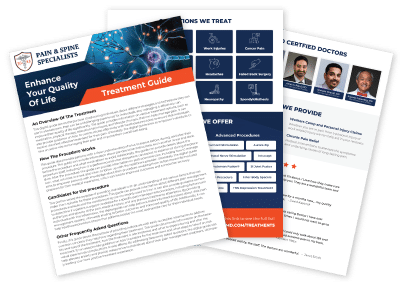
Digital Guide
Treatment overview and more!
Why Choose a Spinal Cord Stimulator?
Spinal cord stimulation (SCS) has been shown to reduce the intensity of chronic pain, resulting in significant improvements in mobility and patient satisfaction. Research has also shown that SCS can provide five years of meaningful pain relief, with 86% of patients reporting a successful result.
Use the resource buttons below to learn more about the spinal cord stimulation procedure, the trial, and other frequently asked questions. If you are ready to speak with one of our board-certified pain specialists, please use our contact form or give us a call to schedule your new patient consultation.
During your initial consultation, our team will evaluate your current health condition and medical history to determine whether SCS treatment is a suitable option for you. If it is, the next step is to proceed with a trial to confirm the efficacy of the treatment before the implantation process.


What Patients Are Saying
Great office, good people. Been there quite a few years. Never a problem. Leave them a message, they always respond. I've had six back surgeries 2knees and right shoulder. Gregg keeps my chronic debilitating pain managed well so I can still live my life best I can. Im so grateful.
Jenny Martins / google review
Dr. Rao. I can't find the words to tell you how much he has meant to me. I followed him from an old practice to his very new high tech office. They offer so many different areas of assistance to those with issues from nutrition to spinal surgery... and much more. His office is professional.
Mom To2 / vitals
Dr. Rao is such an amazing doctor! During my first visit, he never tried to rush through my appt.; he genuinely listened to all my concerns and then took his time to explain to me in detail all his recommendations and how they would help me.
Nikki / healthgrades
Spinal Cord Stimulation Treatment Guide
Spinal Cord Stimulation Digital Guide
Our board-certified back pain specialist doctors specialize in minimally invasive treatments like the Spinal Cord Stimulation. Download our guide to learn more about our comprehensive services focussed on pain management for chronic pain.

More Resources
Access to our Spinal Cord Stimulation guide, pain quiz, FAQ's, and patient reviews.


We Accept All Insurances
Individualized Patient Care
Board Certified Doctors
Seen Within Two Weeks
How do spinal cord stimulators work?
The spinal cord stimulator is a small device surgically placed in the spine. The device has small threads or leads that are placed in the lower back region, between the spinal cord and the epidural space, more commonly known as the vertebrae.
The device delivers mild electrical impulses to the spinal cord, which alters the pain signals sent to the brain. This technique masks the pain signals, providing patients with relief. SCS is viewed as an alternative to traditional pain management techniques, such as opioids, and has a lower risk of addiction or overdose. The implantation of the device is done by a surgical procedure and is considered minimally invasive.
Patients can manage their pain symptoms with a small remote that gives them more control over their pain levels. Using the spinal cord stimulation remote is a straightforward process. The device is small and has a few buttons that patients can use to adjust the intensity of the electrical stimulation.
All patients are given clear instructions on how to use SCS remote, and our team of medical professionals can also provide guidance and assistance as needed. With proper use, SCS spinal cord stimulation remotes can give patients a high degree of control over their pain and improve their range of motion.
More likely to experience pain relief. - Medtronic
Of meaningful pain relief. - National Institutes of Health
Is spinal cord stimulation right for you?
When experiencing chronic back pain, seeking a pain management specialist's guidance is crucial. At Pain and Spine Specialists, we provide you with the most effective pain management solutions tailored to your specific needs.
Take a look at an overview of our comprehensive consultation process:


Review of Medical History
Your journey begins with a thorough review of your medical history. We believe that understanding your past health experiences is vital in diagnosing your present condition accurately. Our team will thoroughly scrutinize all relevant information, including previous illnesses, treatments, surgeries, allergies, and lifestyle habits. This comprehensive insight into your health background enables us to identify potential causes of your pain.
Physical Examination
Next, we conduct an in-depth physical examination. We assess your posture, mobility, physical strength, and the areas where you experience discomfort. This hands-on approach allows us to detect abnormalities and helps us better understand the nature of your pain.
Diagnostic Imaging
To further enhance our understanding of your condition, we employ advanced diagnostic imaging techniques such as X-rays, MRI scans, and CT scans. These tools offer us a detailed view of your body's internal structures, enabling us to pinpoint the exact source of your pain.
Nerve Tests
In some cases, we may recommend nerve tests. These tests help us measure the electrical activity in your nerves and muscles, providing valuable insights into how well your nervous system functions. This can be especially helpful if we suspect a nerve-related issue is causing your pain.
Diagnostic Nerve Blocks
In certain situations, we might suggest diagnostic nerve blocks such as facet joint injections, epidural steroid injections, SI injections, or medial branch blocks. These procedures temporarily numb specific nerves, helping us determine if they are the source of your pain.
All these steps lead us to decide whether spinal cord stimulation could be a suitable treatment option for you. We are committed to ensuring you understand each step of the process, and we encourage you to ask questions at any time.
Nonsurgical Treatments Often Tried First
After diagnosing your condition, we typically recommend nonsurgical treatments such as medications, physical therapy, or steroid injections before considering SCS therapy. If these treatments do not provide sufficient relief, spinal cord stimulation may be the next step. Our specialists will review the benefits of the device and any potential risks you may incur, and they will then advise you on the necessary steps to have the device implanted.
What Conditions Does Spinal Cord Stimulation Treat?
Spinal Cord Stimulation (SCS) is typically used to treat chronic pain conditions that have not responded well to other treatments.
It's important to note that using SCS for these conditions is only sometimes appropriate, and a qualified healthcare provider should make the decision to use SCS as a treatment option on a case-by-case basis.
Explore Our Webinars and Podcasts
Learn about The Conditions We Treat and the treatments We offer from our board-certified doctors.

Is SCS a Good Alternative to Opioids?
Spinal cord stimulation is considered to be an excellent alternative to opioid pain management for some patients. Opioid pain medications can be effective in managing chronic pain, but they also carry a risk of addiction, dependence, and other side effects. SCS, on the other hand, provides pain relief by using electrical impulses to disrupt pain signals to the brain without needing medication.
SCS can also be used in conjunction with medications for pain management. Many patients who undergo spinal cord stimulation continue to take medications, although in many cases, patients are able to reduce their usage or stop altogether.
Spinal cord stimulation is often used as part of a multimodal pain management approach, which may include medication, physical therapy, and other treatments. Using SCS in combination with medication can provide patients with more effective pain relief, allowing them to achieve a better range of motion.
At Pain and Spine Specialists, we offer medication management services so patients are carefully monitored and assisted during opioid medication use.
Starting the Process for an SCS
Once you decide to move forward with a spinal cord stimulator, there are a few steps you must follow. The initial part of the process requires you to schedule a psychological evaluation. This psychological evaluation is administered before the trial to determine if there is any mental health risk due to SCS placement.
Some patients do not respond well to a foreign device being surgically implanted in their body. For those individuals, a surgically placed device may heighten anxiety and worry.
Elevated stress levels may negatively impact the effectiveness of the spinal cord stimulation, and you may continue to feel pain in the same manner. Since SCS requires surgery for placement and use, a psychological evaluation is vital for all parties involved to ensure the patient will receive the best outcome possible.
If the psychological evaluation indicates that a patient is not emotionally capable of handling the placement of the device, then we cannot proceed with the procedure. Fortunately, there are alternative treatments to spinal cord stimulation that can then be considered during a follow-up consultation.
The psychological evaluation must be completed by a mental health professional, who will review basic information, medical history, and your struggle with chronic pain. Once the mental health professional has completed their evaluation and determined you are a good fit, you are able to proceed to the next steps.


The SCS Trial Procedure
Once an individual has completed their psychological evaluation, they proceed to a trial spinal cord stimulation period.
With the spinal cord stimulator trial, patients can experience the benefits of SCS without undergoing full surgery. This trial period allows patients to test-run the device at home and evaluate their pain relief. The trial will last roughly three to five days, allowing you to determine if the pain symptoms are subsiding. If you experience a 50% reduction in pain or more, the SCS trial can be considered a success.
spinal Cord stimulator trial procedure:
The trial SCS is an outpatient procedure and can be done in a doctor's office or an outpatient facility. During the spinal stimulator trial procedure, your pain management doctor will place the temporary SCS trial implant using fluoroscopy.
Fluoroscopy is a medical imaging technique that uses X-rays to create real-time moving images of the internal structures of a patient's body. It is often used to assist doctors during surgical procedures, allowing them to see the inside of the body and guide their instruments with precision.
Based on the location of your pain, the SCS trial leads will be carefully and precisely placed in specific portions of your epidural space, which is the area surrounding the spinal cord.
Spinal cord stimulation leads are thin wires that are connected to a small device called a spinal cord stimulator, which delivers electrical impulses to the spinal cord. These impulses are what interfere with the pain signals that are sent to the brain.
For the SCS trial, the stimulator device will not be surgically implanted inside the body; only the lead wires will be placed fluoroscopically.
Spinal cord stimulator implant and Lead Placement
After a successful spinal cord stimulation trial, you can move forward with a permanent implant procedure. The procedure requires minimally invasive surgery, but surgery nonetheless.
Please note that a permanent spinal cord stimulation implant can be removed in the future if necessary. Reasons for removal may include a change in the patient's medical condition or if the device is no longer effectively controlling the patient's pain.


SCS Procedure Steps:
- 1Preoperative Preparation: The patient is prepared for surgery, which involves cleaning the area where the generator will be implanted and administering local anesthesia to numb the area.
- 2Placement of the Leads: Our doctors will make a small incision in the patient's back, carefully insert the leads through a needle or catheter, and place them in the epidural space surrounding the spinal cord. The leads are then secured in place with sutures.
- 3Placement of the Generator: Once the leads are in place, a small incision is made near the hip or abdomen, and the generator is implanted under the skin. The surgeon then connects the leads to the generator and tests the system to ensure it works correctly.
- 4Closing the Incisions: After the generator is in place, the surgeon will close the incisions with sutures or surgical staples and cover them with a sterile dressing.
- 5Postoperative Recovery: After the procedure, the patient is taken to a recovery area, where they are monitored for a short period before being released. The patient can usually go home the same day or the day after the surgery.
spinal cord stimulator recovery time
Following a Spinal Cord Stimulator procedure, it is important to be aware of potential risks and side effects. As with any surgical intervention, there may be risks such as infection, swelling, bleeding, or allergic reactions. Some patients may also experience discomfort at the site of the implant. However, these occurrences are rare, and our team is well-prepared to manage and minimize these risks.
The First Few Weeks
Recovery from this procedure will take a shorter amount of time than other standard spinal surgeries. Postoperatively, you may resume light activities after a few weeks, with a full recovery typically after eight weeks.
Your surgeon and pain specialist will monitor your recovery to ensure you have a successful outcome from SCS implantation. For many patients, the mild electrical impulses that alter and mask the pain signals are a significant reprieve from their previous pain experiences. Instead of pain radiating through your back, the sensation changes to something manageable.
The pain-relieving stimulation can be flexibly programmed for appropriate therapy to provide a gentle tingling sensation. A mild tingle wins over the pain that radiates.
Long-Term Recovery
Our pain management doctors diligently monitor your progress. We focus on assessing the effectiveness of the treatment by observing changes in your pain levels, mobility, and overall quality of life. Regular follow-up appointments will be scheduled, where we will discuss your experiences, answer any queries, and adjust your treatment plan if necessary. Our approach is not just about treating pain but about ensuring a safe, personalized, and ethical treatment process that resonates with your unique health needs.
We understand that pain management is not a one-size-fits-all solution. Don't get discouraged if you don't experience adequate relief with spinal cord stimulation. Our providers have extensive knowledge and experience in a broad range of pain management techniques.
Frequently Asked Questions
Explore some of the most common questions we receive about Spinal Cord Stimulation treatment at Pain and Spine Specialists.
The following types of doctors offer Spinal Cord Stimulation:
- Pain management specialists
- Neurosurgeons
- Anesthesiologists
- Neurologists
Yes, Spinal Cord Stimulation is typically covered by most insurance providers, but coverage can depend on your specific plan and the medical necessity of the procedure. It's always best to check with your insurance provider to confirm.
Alternatives to Spinal Cord Stimulation treatment can include physical therapy, medication management, cognitive behavioral therapy, nerve block injections, and potentially surgery, depending on the root cause of the pain.
Yes, Spinal Cord Stimulation is considered a minimally invasive procedure. It involves implanting a small device under the skin that delivers electrical signals to the spinal cord to help manage pain.
You can find a Spinal Cord Stimulation treatment center near you by consulting with your primary care physician or pain management specialist for recommendations, using online search engines and directories dedicated to medical providers, such as Healthgrades or Zocdoc, or contacting your local hospital or medical center for referrals.
To find a Spinal Cord Stimulation specialist near you, you can ask your primary care physician or pain management specialist for a referral, use online search engines and directories specialized in medical professionals, such as Healthgrades or Zocdoc, or contact local hospitals that have pain management departments for recommendations.
The cost of Spinal Cord Stimulators can vary depending on factors such as location, hospital fees, and insurance coverage. It is best to consult with your healthcare provider and insurance company to get an accurate estimate of the cost.
Before considering Spinal Cord Stimulation, other treatments that are often tried include medication therapy (such as pain medications or nerve pain medications), physical therapy, injections (such as epidural steroid injections or nerve blocks), radiofrequency ablation, and surgical interventions (such as laminectomy or discectomy).
Medicare and Medicaid may cover Spinal Cord Stimulation in certain cases. However, coverage may vary based on specific circumstances and eligibility criteria. It is advisable to consult with your healthcare provider and insurance provider to determine coverage options.
Why Choose SCS?
The spinal cord stimulator is clinically proven and FDA-approved to treat various chronic pain conditions. Compared to conventional pain treatments, SCS is often more effective in reducing pain and improving a patient's quality of life. With SCS, patients can take control of their pain management and pursue activities that would have otherwise been too painful in the past.


About Us
We are a comprehensive pain management practice with board certified Aurora Zip doctors in Maryland, Pennsylvania, and Virginia.
Digital Guide
View our providers, locations, services, and patient reviews.
More Resources
Here is a list of resources that were discussed on this page:
Treatment Candidates
Patients with the following conditions may be candidates for an Spinal Cord Stimulation:

Find a Location
If you are searching for "Spinal Cord Stimulation near me" then click button to search by zip-code.
Contact Us
Looking for spinal cord stimulator doctors near me? Please call Pain and Spine Specialists and speak to our team of board-certified doctors.

Schedule Appointment

Ask A General Question
Ask A Question

Billing / Insurance Question
Billing / Insurance

Cancel / Reschedule Request
Cancel / Reschedule
*We accept workers' comp and personal injury claim patients
*We accept workers' comp and personal injury claim patients
Appointment FAQ's
We Accept All Insurances!
That includes Medicare and state Medicaid.
Usually within one week of the initial call.
Appointments can be schedule by phone or through our contact form here.
At Pain and Spine Specialists we provide comprehensive pain care while offering the most up-to-date minimally invasive techniques. Our ethos is to treat each patient (and potential patient) as if they were a family member.
At Pain and Spine Specialists we want to provide the most efficient and pleasurable experience possible. As in all medical facilities, we have certain policies in place to ensure that you receive the time you require to address your needs as well as enhance your experience while in our care.
We encourage patient feedback to better improve your experience. We strive to create a friendly and warm environment where patients feel their voices are heard and validated.
Meet Our Team
Spinal Cord Stimulation Specialists in Maryland, Pennsylvania, Florida and Virginia
At Pain and Spine Specialists, our team of spinal cord stimulator doctors are committed to giving you the most effective treatment when treating your pain. We believe all patients should have access to exceptional care, so begin your path toward better health with us today. You can find us conveniently located throughout Maryland, Pennsylvania, Florida, and Virginia.